License Plate Recognition vs RFID: Which Access Control Technology Is Right for You?
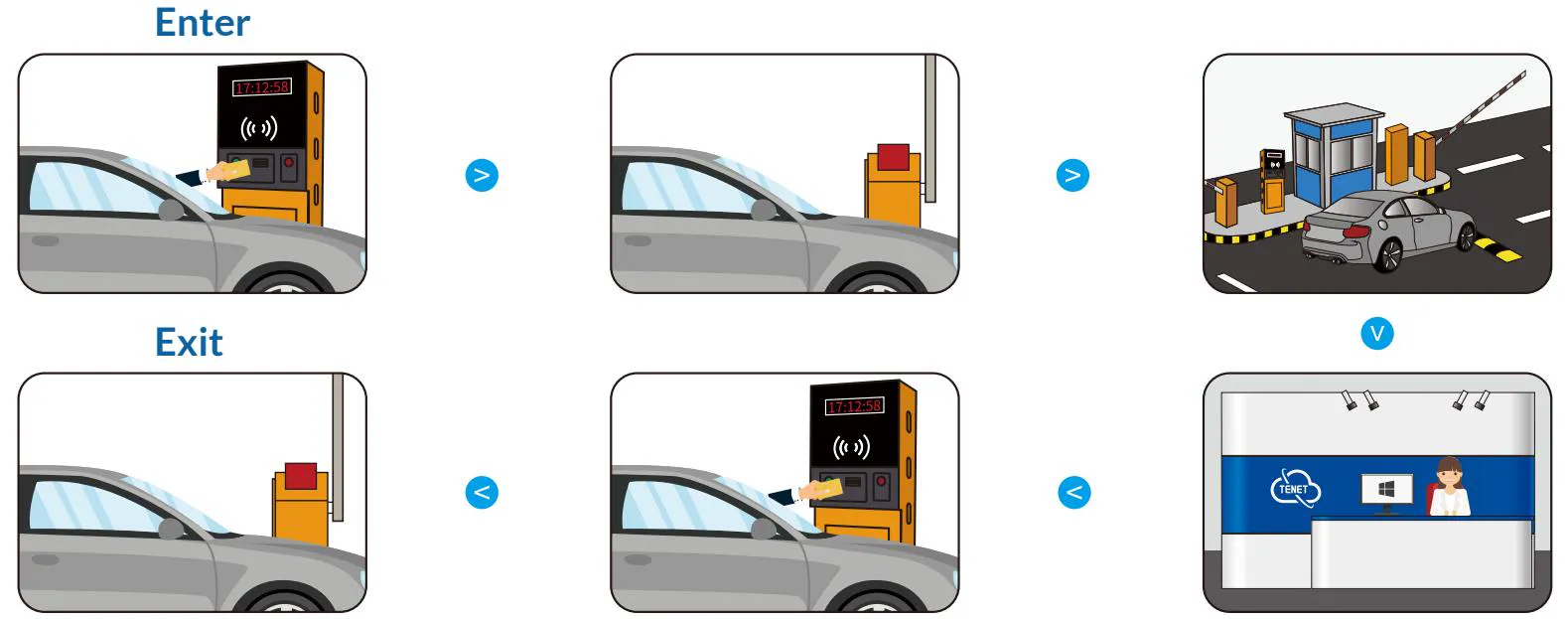
When implementing a vehicle access control system, one of the first decisions you'll face is choosing between License Plate Recognition (LPR) and Radio Frequency Identification (RFID). Both technologies have their strengths, and the right choice depends on your specific use case.
How LPR Works
LPR cameras use optical character recognition (OCR) and AI algorithms to capture and read vehicle license plates in real time. Modern LPR systems achieve recognition rates above 99% and can process vehicles in under 300 milliseconds — fast enough for barrier-free flow at highway speeds.
How RFID Works
RFID systems use radio waves to communicate between a reader (mounted at the entrance) and a tag (placed on the vehicle windshield or integrated into a card). When a vehicle approaches, the reader detects the tag and grants or denies access based on database permissions.
LPR Advantages
RFID Advantages
Which Should You Choose?
For most commercial and public parking applications, LPR is the preferred choice due to its convenience and versatility. It's particularly well-suited for: shopping malls, office buildings, hotels, hospitals, and mixed-use developments.
RFID shines in controlled environments where all vehicles are registered and tagged, such as: factory employee parking, logistics hubs, gated communities with long-term residents, and mining or construction sites with heavy vehicle traffic.
The Hybrid Approach
Many modern installations use both technologies together — LPR as the primary system for visitor and casual access, with RFID as a VIP/fast-lane option for registered frequent users. This hybrid approach combines the best of both worlds: universal access for visitors and maximum throughput for regular users.
Conclusion
There's no one-size-fits-all answer. The best choice depends on your user mix, environment, budget, and security requirements. GateFlow offers both LPR cameras and RFID readers as part of a fully integrated entrance management platform — contact us to discuss which solution fits your project.
Reading Guide & Further Reflection
This article is recommended for project managers, property administrators, security system integrators, and industry practitioners planning or upgrading entrance management systems. We suggest focusing on the following while reading: First, compare the technical parameters and selection criteria in this article against your actual project conditions — every project has unique characteristics, and general guidance needs adjustment for specific site conditions. Second, note the industry data and case details mentioned, which can serve as reference material for project proposal justification and budget planning. Third, if any technical concepts or product specifications are unclear, we recommend documenting them and consulting professional suppliers' technical teams to avoid selection errors from misinterpretation. Finally, convert the practical recommendations in this article into a checklist for your project, verifying each item during solution review and construction acceptance to ensure every critical step is properly addressed.
The GateFlow technical team offers complimentary solution evaluation services for your project. Simply send us your project requirements including site conditions, expected traffic volume, budget range, and any special requirements — our engineers will provide preliminary solution recommendations covering equipment selection, system architecture, and estimated costs after thorough analysis. This service is completely free with no purchase obligation — we believe building trust through professional technical exchange is more valuable than any sales pitch.
GateFlow is a global leader in intelligent entrance management equipment manufacturing, offering a complete range of barrier gates, sliding gates, turnstiles, license plate recognition, facial recognition, bollards, and RFID accessories. We maintain a factory-direct model, delivering competitive pricing and reliable product quality to clients across 50+ countries. Whether you need rapid delivery of standard models or customized colors, dimensions, logos, and functional configurations tailored to your project, our OEM/ODM team provides technical feasibility assessment and customization proposals within 2 working days.
Browse more industry articles on our blog listing page. For the latest product pricing, technical specifications, or project case studies, please visit our Products Center or contact our sales team directly. GateFlow looks forward to partnering with you to build smarter, safer, and more efficient entrance management systems.
GateFlow products are certified to ISO 9001 quality management systems, CE, RoHS, and other international standards. Our production facility features advanced sheet metal fabrication centers, automated coating lines, electronics assembly lines, and comprehensive finished product testing laboratories — fully traceable from raw material receiving to finished product shipment. Wherever you are located, we provide product configurations compliant with local voltage standards and installation codes, and support you through customs clearance, transportation, and on-site installation and commissioning. Contact us to begin your entrance management system upgrade journey.